

×
Series note: This article is part of our ongoing troponin series. In this first part, we focus on Hytest’s cardiac troponin I (cTnI) antibody solutions and the key considerations behind epitope selection in cardiac biomarker assay development. In the coming months, we will revisit selected established troponin products and highlight their continued relevance.
cTnI is one of the most important biomarkers of acute myocardial infarction (AMI), but it is also one of the most challenging analytes for immunoassay development.
Unlike stable protein targets, cTnI exists in multiple molecular forms in patient samples. It circulates as IC or ITC complexes, and it undergoes structural changes such as proteolytic degradation, phosphorylation, and other post-translational modifications. These changes can alter or mask antibody-binding sites, directly impacting assay performance.
In addition, assay accuracy may be affected by sample-related interferences, including autoantibodies against cTnI, human anti-animal antibodies (HAMA), rheumatoid factors (RF), and anticoagulants such as heparin.
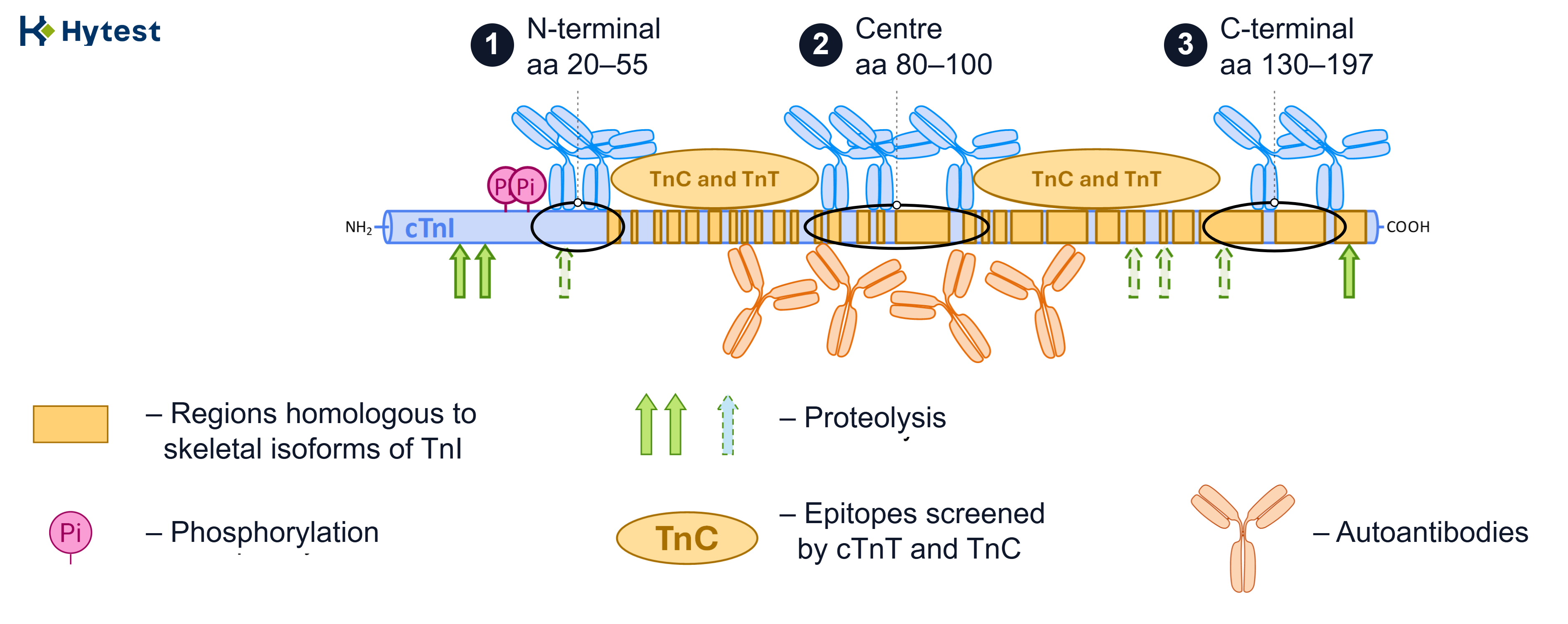
Figure 1. The complexity of cTnI immunodetection.
Building on more than 30 years of expertise in troponin research, and its early role in introducing anti-cTnI monoclonal antibodies to the market, Hytest has developed a scientifically driven epitope selection strategy to address the analytical complexities of cTnI detection.
Most perspective cTnI Epitope Regions Recommended by Hytest and Their Scientific Rationale
| Region | Scientific and commercial rationale | Representative Hytest MAbs |
| N-terminal region around aa 20–55 | Provide strong cardiac specificity – region 2-32 is unique to cTnI and not present in skeletal TnI isoforms. Epitopes around aa 40–55 are located within the more stable region of cTnI, which is less prone to proteolytic degradation, partly due to protection by TnC. TnC binding may partially affect epitope accessibility. Carefully designed antibodies, including Y309, 19C7cc, and RecChim19C7, can recognize this region of cTnI even though it’s partially shielded by TnC. Lower susceptibility to anti-cTnI autoantibody interference. | Y306, Y503 (aa 22-40) RecR1, RecR23, RecR33, RecR85 (aa 24-40) 19C7cc, RecChim19C7 (aa 41-49) Y309 (aa 39-54) |
| Central region around aa 80–90 | Stable core region protected by TnC interaction. Strong analytical sensitivity potential. | RC560, 560cc (aa 83-93) RecChim16A11, 16A11cc (aa 83-90) Y302 (aa 83-100) |
| C-terminal region around aa 130–197 | Supports detection of diverse circulating cTnI forms and fragments. Lower susceptibility to anti-cTnI autoantibody interference. | Y501, Y504 (aa 161-178) Y502, Y505 (aa 174-191) MF4cc (aa 190-196) |
These three strategic regions reflect Hytest’s scientific approach to cTnI assay design and show strong alignment with commercially relevant epitope hotspots reported for IFCC-listed assays. Together, they cover or overlap with most of these hotspot regions.
The MAbs highlighted in this article are representative examples from Hytest’s broad anti-cTnI antibody portfolio. Beyond these clones, we offer additional MAbs targeting different cTnI epitope regions, with various animal origins (for example, rabbit, swine, rat) and formats, including in vitro-produced, recombinant, and chimeric options. This gives assay developers flexibility to select antibody combinations tailored to their platform and performance needs.
Finally, reliable cTnI detection requires more than sensitive antibodies. Harmonization across assays also depends on appropriate reference materials, calibrators, and clinically relevant troponin forms. Hytest North America offers one recombinant human cTnI, Cat. # 8RT17, a highly purified protein, that can be used as a calibrator for immunoassays, as an immunogen for antisera production, and as a mass cTnI standard. Moreover, we offer three recombinant troponin complexes to support cTnI assay development: the cardiac troponin ternary complex, cTn I-T-C complex (Cat. # 8ITCR); the binary cTn I-C complex (Cat. # 8ICR3); and a chimeric binary cTn I-C complex (Cat. # IFC20) consisting of the most stable part of cTnI, fragment 28–110, connected to TnC by a 20-aa flexible linker.
For more information and pair recommendations, please refer to our Troponin Booklet.
For details, please contact the Hytest Sales team.
You can find the Cat. # 8RT17, Cat. # 8ITCR, Cat. # 8ICR3, and Cat. # IFC20 datasheets on the product pages.



Copyright © Hytest Ltd.