

×
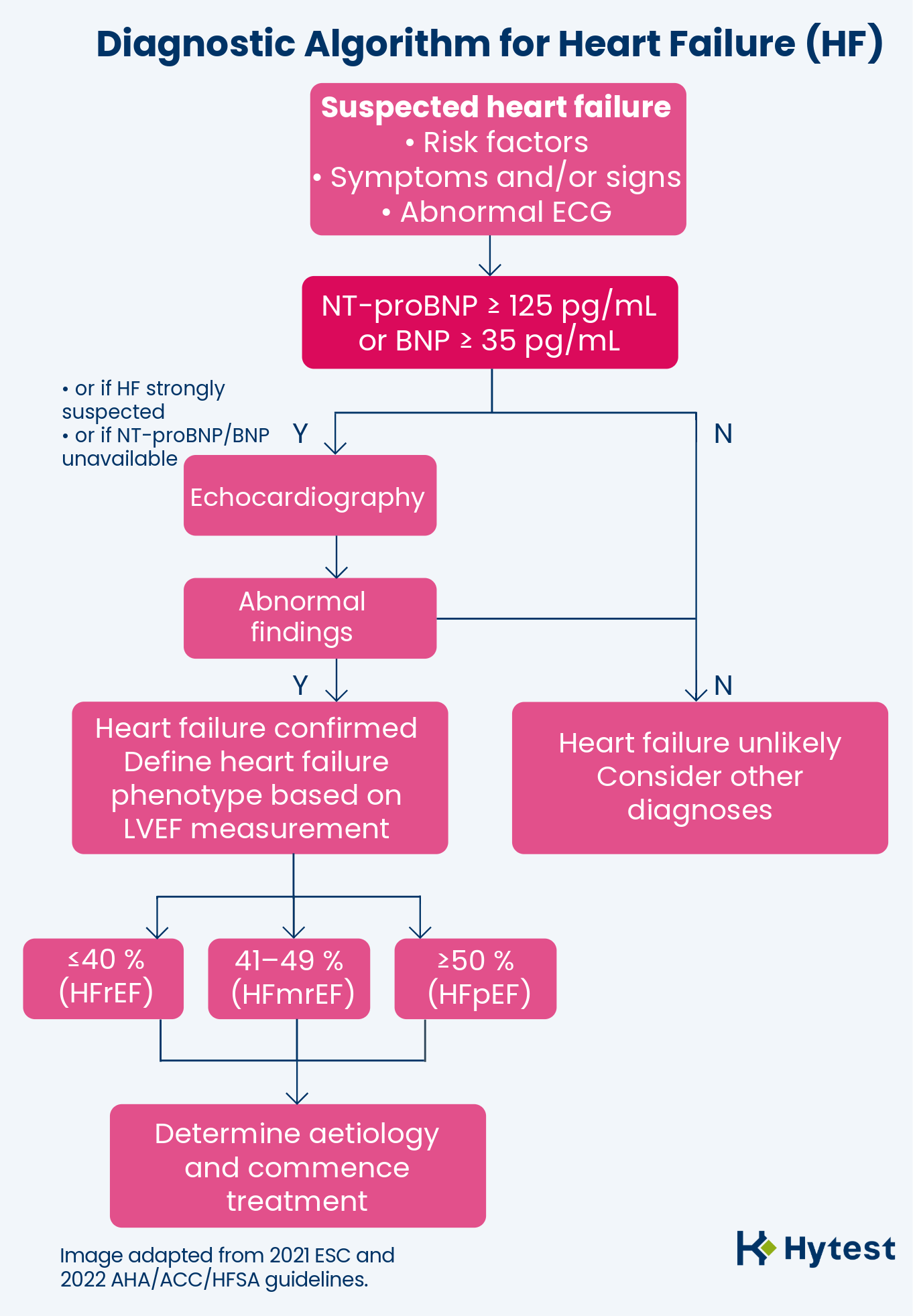
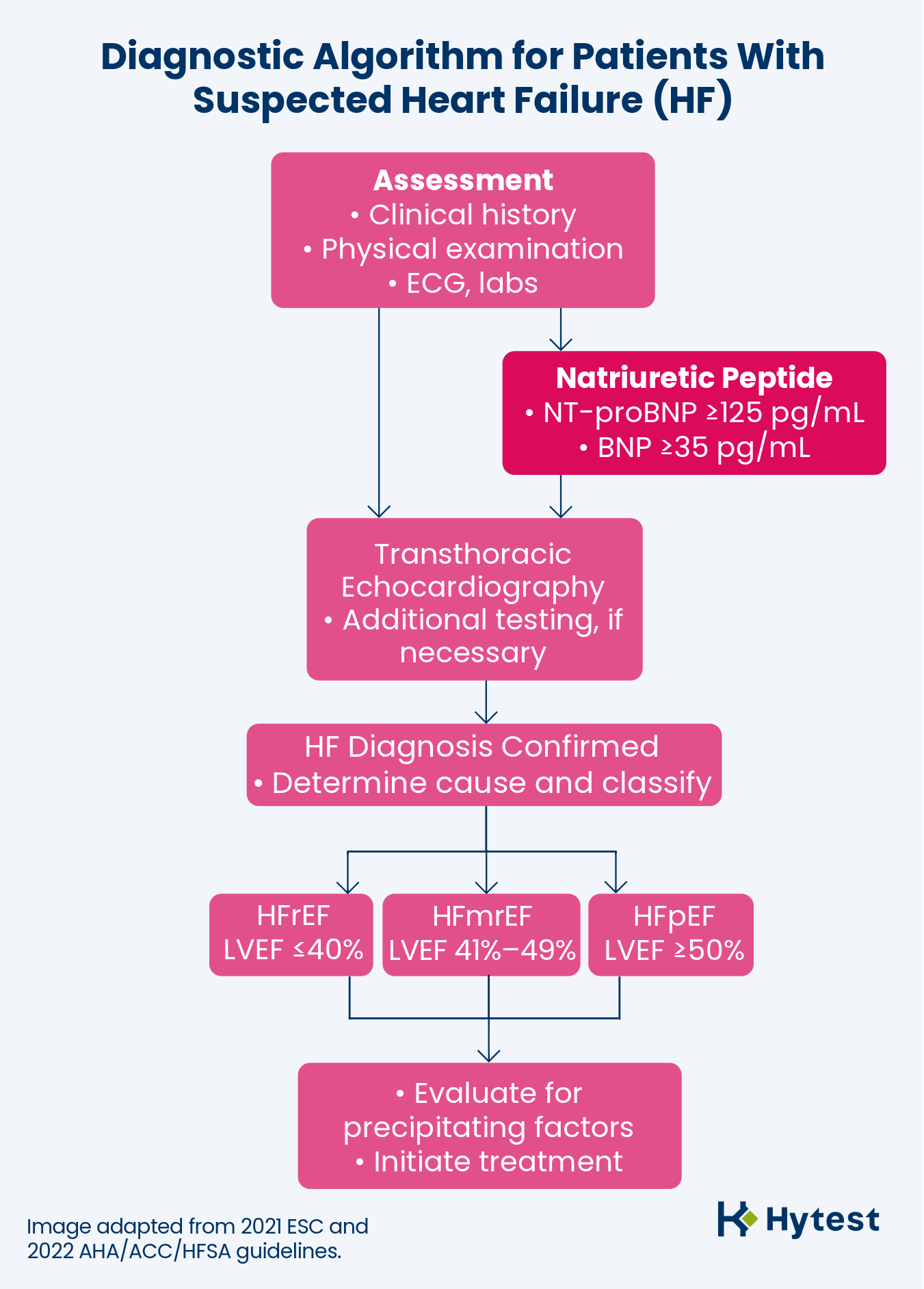
February is American Heart Month, a timely reminder of the ongoing burden of cardiovascular disease and the growing need for reliable tools to support heart failure (HF) care. Plasma concentrations of natriuretic peptides (NPs) are recommended as initial diagnostic tests in patients with symptoms suggestive of HF to rule out the diagnosis.
Guideline-aligned NP threshold (2021 ESC and 2022 AHA/ACC/HFSA):
— Acute HF (Emergency department/new onset dyspnea; diagnosis uncertain): Rule-out cutoffs: B-type natriuretic peptide (BNP) < 100 pg/mL or N-terminal pro-B-type natriuretic peptide (NT-proBNP) < 300 pg/mL.
— Non-acute HF (suspected chronic HF): Triage suspected cases: NT-proBNP ≥ 125 pg/mL or BNP ≥ 35 pg/mL supports proceeding to echocardiography.
Text continues after the images.
Guideline thresholds provide a clear clinical framework and make assay comparability essential. Therefore, for assay developers, delivering consistent, clinically meaningful results depends not only on the biomarker choice, but also on reliable, well-characterized raw materials that perform consistently in clinical samples.
Hytest provides a complete portfolio of raw materials for both NT-proBNP and BNP assay development, with options tailored to different design goals.
For NT-proBNP (Cat. # 4NT1/4NT1cc), we provide multiple epitope pathway options (Table 1):
— MAbs targeting central-region NT-proBNP to support method correlation with commercially established reference assays.
— MAbs targeting C-terminal NT-proBNP for developers seeking broader circulating-form coverage and to help mitigate potential glycosylation-related epitope masking.
Table 1. Epitopes of Hytest NT-proBNP antibodies under Cat. # 4NT1/4NT1cc
Antibody | MAb# |
|---|---|
| 1-12 | 5B6cc |
| 5-12 | 29D12cc |
| 13-24 | 15F11cc |
| 15-20 | 13G12cc, 18H5cc, 16F3 |
| 15-21 | 7B5cc |
| 25-34 | NT34cc |
| 27-31 | NT13 |
| 31-39 | 11D1cc |
| 34-39 | 16E6cc |
| 43-46 | NT45, NT46 |
| 48-56 | 15D7 |
| 63-71 | 15C4cc |
| 67-76 | 24E11cc, 28F8 |
Clinical interpretation of NT-proBNP is well established using the widely adopted Roche Elecsys method and its clinical decision thresholds. To help developers align with these workflows, we recommend the antibody pairs listed in Table 2 to support result comparability at key medical decision points. On lateral flow (LF) platform, these pairs demonstrated strong correlation with the Roche Elecsys NT-proBNP II assay.
Table 2. Pair recommendations for targeting central region of the NT-proBNP molecule on LF.
| Capture | Detection | Correlation (R2) |
|---|---|---|
| NT45 | 7B5cc | 0.993 |
| 15F11cc | NT45 | 0.986 |
| NT45 | 7B5cc + 29D12cc | 0.986 |
| NT13 | NT45 | ˃0.99 |
In addition to the recommended pairs, we offer a range of market-proven antibody pairs targeting the central region and full-length NT-proBNP, validated across multiple platforms. We can also support your assay development or upgrade by helping you identify an antibody that fits your current setup. Please contact our sales team for product information and technical support.
For BNP (Cat. # 4BNP2/4BNP2cc) assay development, Hytest provides tailored antibody pair recommendations based on the customer’s target method comparability and assay platform requirements.
BNP testing is inherently challenging because BNP circulates as a mixture of BNP, proBNP, and multiple fragments, all of which can contribute to the measured signal. In addition, BNP assays are not fully standardized, so results may vary between methods. To support robust assay design, Hytest BNP antibody pairs are designed to detect both the BNP peptide and the unprocessed proBNP protein with the same efficiency and high sensitivity. Among them, the 50E1cc (capture)–24C5cc (detection) pair can achieve a sensitivity of < 1 pg/mL (depending on assay format and conditions).
To help customers quickly identify the best fit for their target methods, Table 3 summarizes the correlation of selected Hytest BNP pairs with major commercial assays.
Table 3. Pair recommendations for BNP immunoassay development.
| Capture | Detection | Correlation |
|---|---|---|
| 57H3cc (a.a. 26-32) | 429cc (a.a. 5-13) | Abbott iSTAT (R2=0.99) |
| 50E1cc (a.a. 26-32) | 130cc (a.a.15-22) | Siemens Advia Centaur (R2=0.97) |
Equally important, an appropriate calibrator strategy is critical during assay development. Standardized calibrators underpin assay standardization and support comparability between assays.
Hytest offers three recombinant antigens to support BNP-family assay development, each serving a distinct purpose:
— Cat. # 8NT2: Non-glycosylated NT-proBNP (aa 1–76) expressed in E. coli. With its consistent structure and broad antibody recognition, it is well suited as a standard for NT-proBNP assays. Cat. # 8NT is selected by NIM as the Chinese reference material.
— Cat. # 8PRO9: Non-glycosylated full-length proBNP (aa 1–108). It is recognized by both Hytest BNP- and NT-proBNP-specific antibodies, making it a practical “unifying” antigen for method development, feasibility studies, and cross-reactivity assessment.
— Cat. # 8GBP3: Mammalian cell line expressed glycosylated proBNP, recommended for assays that aim to reflect real biological samples. It closely mimics endogenous circulating proBNP and demonstrates superior stability in plasma, retaining 90–96% immunoreactivity after 24 hours at room temperature. This makes 8GBP3 a strong calibrator choice when stability and clinical representativeness are critical.
Contact us for more information, technical support, and pair recommendations tailored to your platform and performance targets.



Copyright © Hytest Ltd.